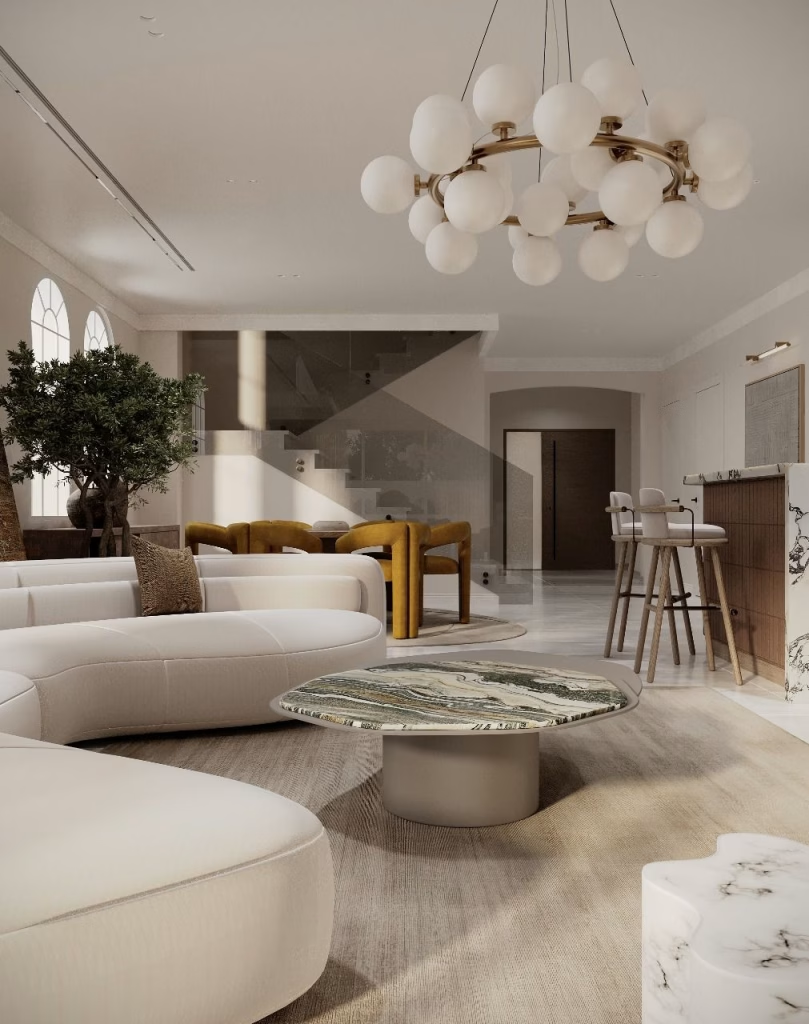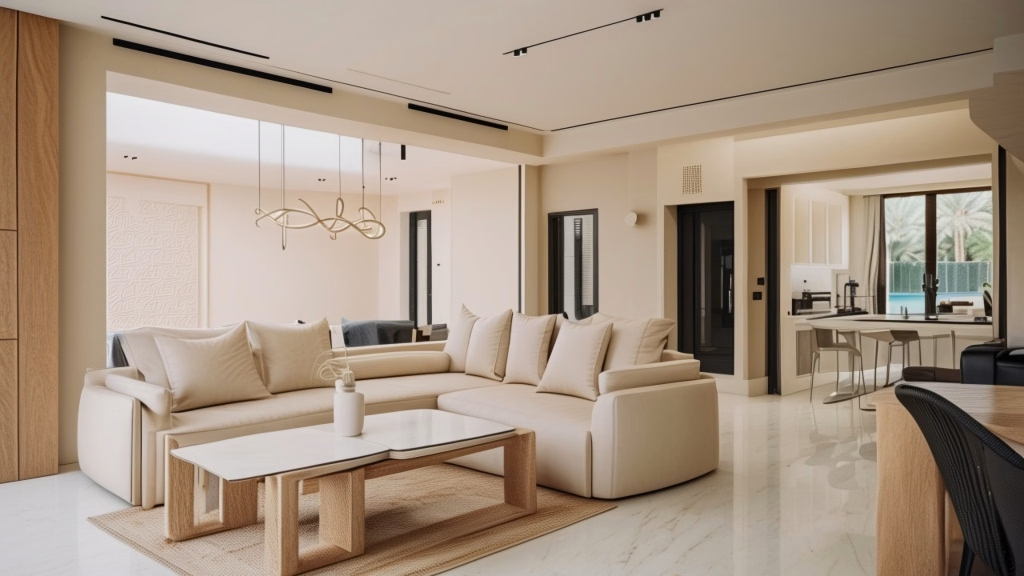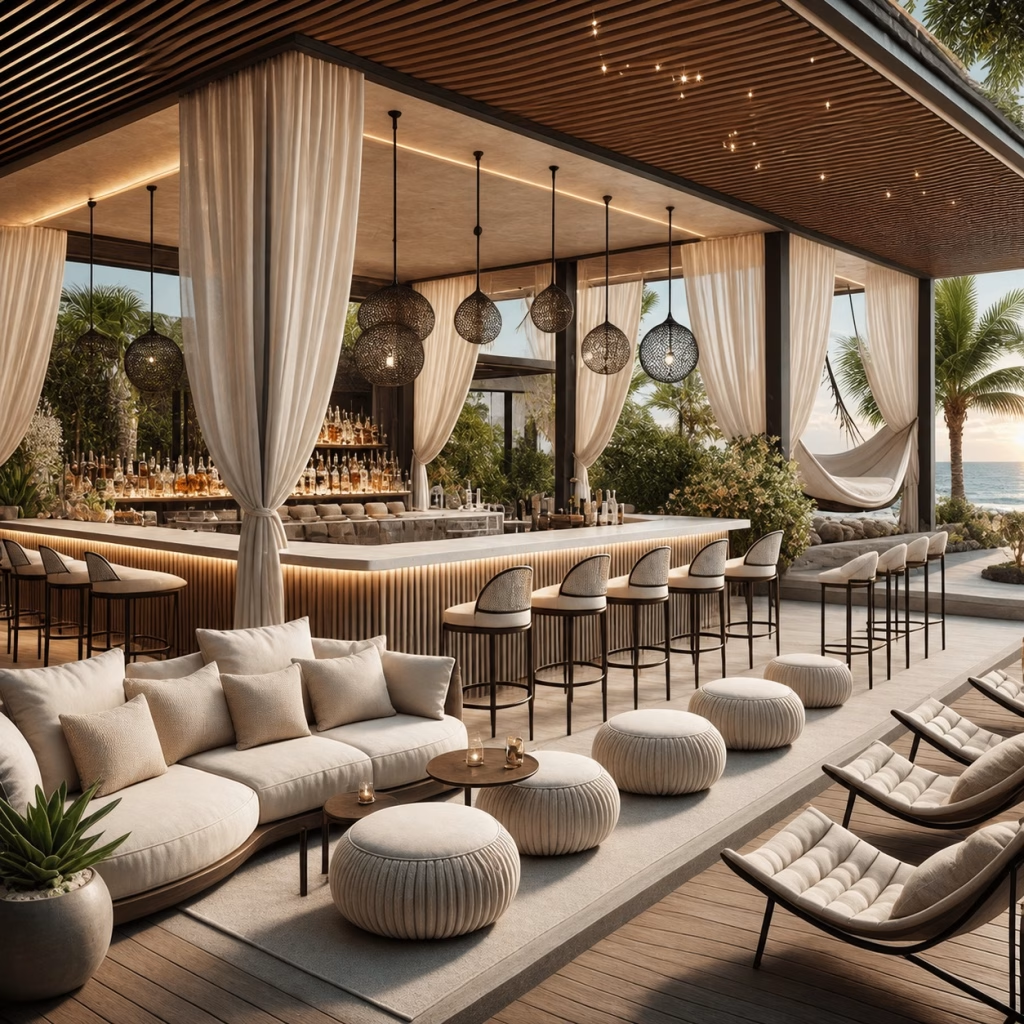


Quick Answer
Golf Place villa interior design is the full process of transforming a bare-shell Emaar handover into a finished, furnished home: concept development, space planning, joinery design, MEP coordination, material specification, procurement, fit-out execution, and snagging. For Golf Place at Dubai Hills Estate specifically, that process also involves Emaar community design guidelines, DDA approvals where required, and an understanding of the orientation and plot characteristics that define each villa type. The right studio will have demonstrated experience with comparable Emaar villas, in-house joinery and fit-out capability, and a process for managing approvals on behalf of the client.
Most Golf Place villa owners receive their Emaar handover notice with a clear practical question: who do I hire to turn this shell into a home, and how do I choose them? The search for a villa interior design in Dubai specialist quickly surfaces a large number of studios, all of which describe themselves in broadly similar terms. This guide is intended to help you distinguish between them on criteria that actually matter for a Golf Place project.
What Does an Interior Designer Do on a Golf Place Villa?
The scope of a full interior design commission on a Golf Place villa covers more ground than most owners initially expect. The visible output, the finished rooms, represents the conclusion of a process that begins with spatial planning and ends with snagging. Understanding what sits between those points matters, because it is where the differences between studios are most significant.
A full-service interior designer on a Golf Place villa will typically manage:
- Concept and spatial planning: translating the brief and the villa’s bare-shell layout into a cohesive design concept, addressing room proportions, traffic flow, view optimisation (golf course orientation is a defining factor in Golf Place Mayfair and Golf Place 2), and the placement of the majlis where required
- Joinery design and specification: designing all built-in cabinetry, wardrobes, kitchen furniture, TV walls, and bespoke architectural elements; this is often where the most significant quality differences between studios become visible in the finished space
- MEP coordination: ensuring the mechanical, electrical, and plumbing layouts are aligned with the design before any floor or wall finishes are applied, which avoids the expensive and disruptive retrospective changes that affect poorly managed fit-outs
- Material and FF&E specification: selecting and sourcing flooring, stone, tiles, sanitaryware, soft furnishings, lighting, and furniture to a documented specification that the fit-out team executes precisely
- Procurement management: handling supplier orders, logistics, and delivery sequencing so that materials arrive in the correct order and the fit-out programme stays on track
- Project management: supervising the fit-out contractor on site, tracking programme, managing variations, and maintaining quality control throughout the works
- Snagging and handover: conducting a formal pre-handover inspection against the specification, ensuring all defects are rectified before the client takes occupation
Studios that offer design-only services will hand the specification document to the client, who then manages the fit-out contractor relationship independently. The practical consequence is that the design quality you approved in the 3D renders may not survive contact with a contractor who has not built to that level of detail before.
Golf Place and Dubai Hills Estate: Why the Context Changes the Brief
Golf Place at Dubai Hills Estate is not a generic Dubai villa community. It sits within Emaar’s master plan for Dubai Hills Estate, and that context creates specific requirements that a designer unfamiliar with the development will not know about until they are encountered on site.
The handover condition matters first. Emaar delivers Golf Place villas as a bare shell: no internal plaster, no flooring, no kitchen, no fitted bathrooms beyond basic MEP stub-outs. This is common across Emaar’s premium communities and it creates both an opportunity and a responsibility. The opportunity is that the entire interior can be designed as a coherent whole, with no pre-existing decisions to work around. The responsibility is that the MEP layout delivered by Emaar at handover needs to be reviewed carefully before any design decisions are finalised, because the stub-out positions for kitchens, bathrooms, and HVAC points directly constrain what is possible without expensive remedial work. A studio with experience in interior design in Dubai Hills will have seen the standard Emaar handover condition across multiple projects and will know exactly where to look.
Community design guidelines are the second constraint. Emaar’s master developer approval process, commonly referred to as the Emaar NOC, applies to any structural or external modification to a Golf Place villa. This includes partition removal or addition, changes to openings, external cladding or finishes, and anything that modifies the building envelope. Any designer you appoint should be able to manage this process on your behalf, including the preparation of the required technical drawings and the submission to Emaar’s approval team. Studios that do not have this experience will either decline structural scope or pass the approval management to you.
Plot orientation and view corridors are the third. Golf Place villas are positioned across the Dubai Hills golf course, and the orientation of the principal rooms relative to that view varies significantly between plots. A designer who has worked on multiple Golf Place projects will understand which rooms face the course, the angles at which the course is visible from first-floor terrace positions, and how to design the internal spaces to maximise that relationship without compromising privacy from neighbouring villas.
Interior Designer, Architect, or Fit-Out Contractor: What Is the Difference?
Owners unfamiliar with the Dubai fit-out market sometimes ask whether an architect can handle the interior design brief. The short answer: there is an overlap, but the disciplines are distinct, and for a Golf Place villa fit-out, an interior design specialist will typically deliver a better result than a generalist architect for the spatial styling, joinery, and FF&E aspects of the project.
The following comparison covers the typical capabilities of each role across the tasks that matter on a Golf Place villa commission:
| Capability | Interior Designer | Architect | Fit-Out Contractor |
|---|---|---|---|
| Concept and mood boarding | Yes, core service | Sometimes | Rarely |
| Space planning | Yes, core service | Yes | Limited |
| FF&E specification | Yes, core service | Rarely | Rarely |
| Joinery design | Yes | Sometimes | Execute only |
| MEP coordination | Yes, manages | Yes, designs | Execute only |
| DDA / Emaar approvals | Yes (specialist studios) | Yes | No |
| Snagging and QC | Yes (full-service studios) | Sometimes | No |
| Structural design | No | Yes | Execute only |
Architects are the right appointment for structural design: if you are making significant changes to the building fabric, including removing load-bearing walls, adding extensions, or changing the external envelope, an architect is required and the structural engineer will work under their direction. For the interior design elements, joinery specification and FF&E procurement, an interior design studio with fit-out capability is the specialist.
A fit-out contractor without a design team will execute what they are given. The quality of the finished result depends entirely on the quality of the specification they receive. Appointing a contractor before a designer means the contractor fills the gaps, and those gaps are visible in the finished space.
How to Choose an Interior Designer for a Golf Place Villa
The market for luxury interior design in Dubai is large and ranges considerably in quality, experience, and the transparency with which studios price their services. The criteria below are specific to what matters for a Golf Place villa commission.
Portfolio depth in comparable projects
Ask to see completed projects in Golf Place or comparable Emaar villa communities (Sidra, Mayfair, or Maple in Dubai Hills Estate). Images of the finished spaces will tell you whether the studio can work at the level of quality the brief requires. Be specific: if the studio says it has done Golf Place work, ask for the villa address or the exact sub-community so you can verify. Studios with genuine project experience will not hesitate to provide this.
In-house joinery and fit-out capability
Joinery is the most significant determinant of fit-out quality in a Golf Place villa. A studio with its own workshop and in-house joinery capability has direct control over what it builds. A studio that subcontracts joinery to whoever is cheapest at the time of the project does not. Ask directly: where is the joinery manufactured and who owns the workshop?
Emaar NOC and DDA approval experience
If your project includes any structural scope, your designer must be able to manage the Emaar NOC and Dubai Municipality DDA approval process. Ask how many NOC applications the studio has submitted for Dubai Hills Estate projects in the last 12 months and what the approval success rate has been. This is a factual question with a factual answer.
Transparent pricing
Some studios quote design fees separately from fit-out costs; others work on a percentage of total project value; others use a fixed fee per square foot. None of these models is inherently better, but you should understand exactly what you are paying for before signing anything. Ask for a breakdown of the design fee, a separate estimate for the fit-out costs, and a clear statement of what happens to the fee structure if the scope changes during the project.
Design-and-build versus design-only
Design-only studios produce the specification and hand it over. Design-and-build studios design and execute under one contract. For a Golf Place bare-shell fit-out, the design-and-build model reduces risk: the studio that designed the space is accountable for building it to the approved specification. A separate contractor relationship introduces a coordination layer and a gap in accountability that tends to produce quality compromises. For more on villa renovation in Dubai Hills and the differences between renovation and new fit-out scope, the studio has detailed guidance available.
How the Client and Designer Relationship Works, From Brief to Handover
The working relationship between a Golf Place villa owner and their residential interior design in Dubai studio follows a clear sequence. Understanding that sequence in advance reduces the anxiety that often accompanies a major fit-out project.
The process typically runs:
- Initial consultation: a senior designer visits the villa (or the handover drawings if the villa is not yet accessible), establishes the full brief, and produces a written scope summary within 48 hours. This should be free of charge and involve no obligation
- Concept development: the studio prepares spatial plans, material palette options, and preliminary furniture layouts for client review. This stage typically takes two to four weeks and concludes with an agreed design direction
- Mood boards and material selection: detailed material boards, finish samples, and furniture options are presented for client approval. For a Golf Place villa, this stage will include specific decisions on flooring (the choice between marble, large-format porcelain, and engineered timber is one of the most consequential cost variables), kitchen specification, and joinery finishes
- 3D visualisation: photorealistic renders of every principal room are produced for client sign-off before any physical works commence. Nothing is ordered or built before the client has approved the 3D images. This is the stage at which the Emaar NOC application is submitted, so that approvals are in place before the fit-out contractor mobilises
- Fit-out execution: the studio manages the on-site contractor, supervises material deliveries, and provides weekly progress reporting to the client. The client’s involvement during this phase is typically limited to reviewing progress visits and approving any variations to the agreed scope
- Snagging and handover: a formal pre-handover inspection is conducted against the approved specification. All defects are documented and rectified before the client takes occupation. A complete handover pack covering all specifications, warranties, and maintenance guides is provided at the final walkthrough
The total timeline for a Golf Place villa from initial consultation to handover typically runs between 14 and 22 weeks, depending on scope and the number of rooms in play. Structural scope that requires an Emaar NOC adds two to four weeks to the approval stage but can be run in parallel with the 3D visualisation process rather than sequentially.
Why Kat Black Design Studio Is a Strong Fit for Golf Place Villas
Kat Black Design Studio has completed multiple projects across Dubai Hills Estate, including full bare-shell fit-outs in Sidra and Maple, and golf course-facing villa interior design in Mayfair. The studio’s in-house joinery workshop means that all bespoke cabinetry, kitchen furniture, and architectural joinery elements are manufactured under direct supervision rather than subcontracted. The DM permit and Emaar NOC process is managed by the studio as standard: clients do not interface with the approvals process directly.
The studio operates a full turnkey interior solutions model, covering everything from first concept to completed snagging under one contract. For a Golf Place villa owner approaching a bare-shell handover, that single point of responsibility, from the first design conversation through to the final walkthrough, is the practical arrangement that best protects the quality of the finished home.
If you are at or approaching your Golf Place handover and want to discuss the design brief before appointing a studio, a free site visit and written scope summary can be arranged within 48 hours of your initial enquiry.