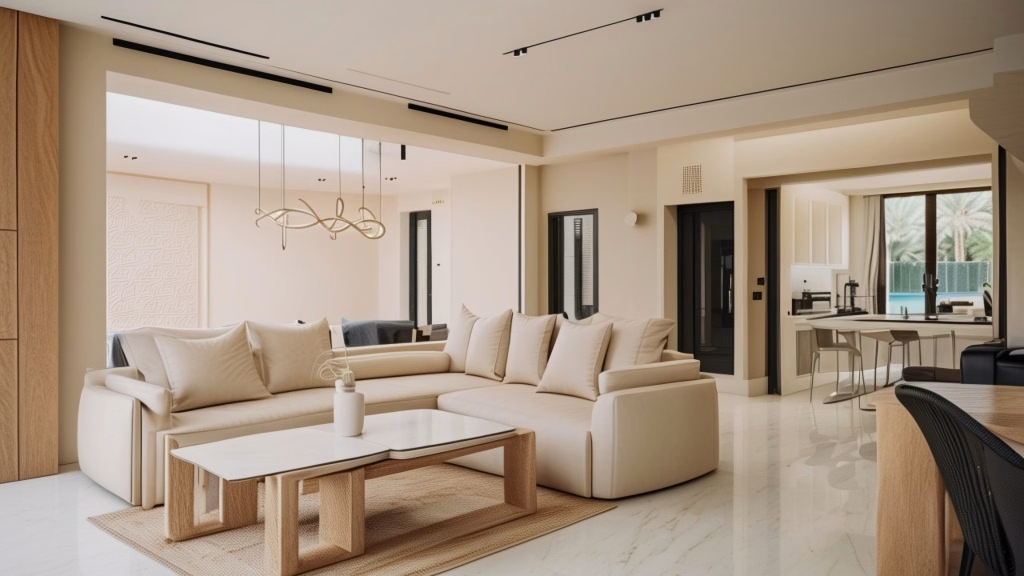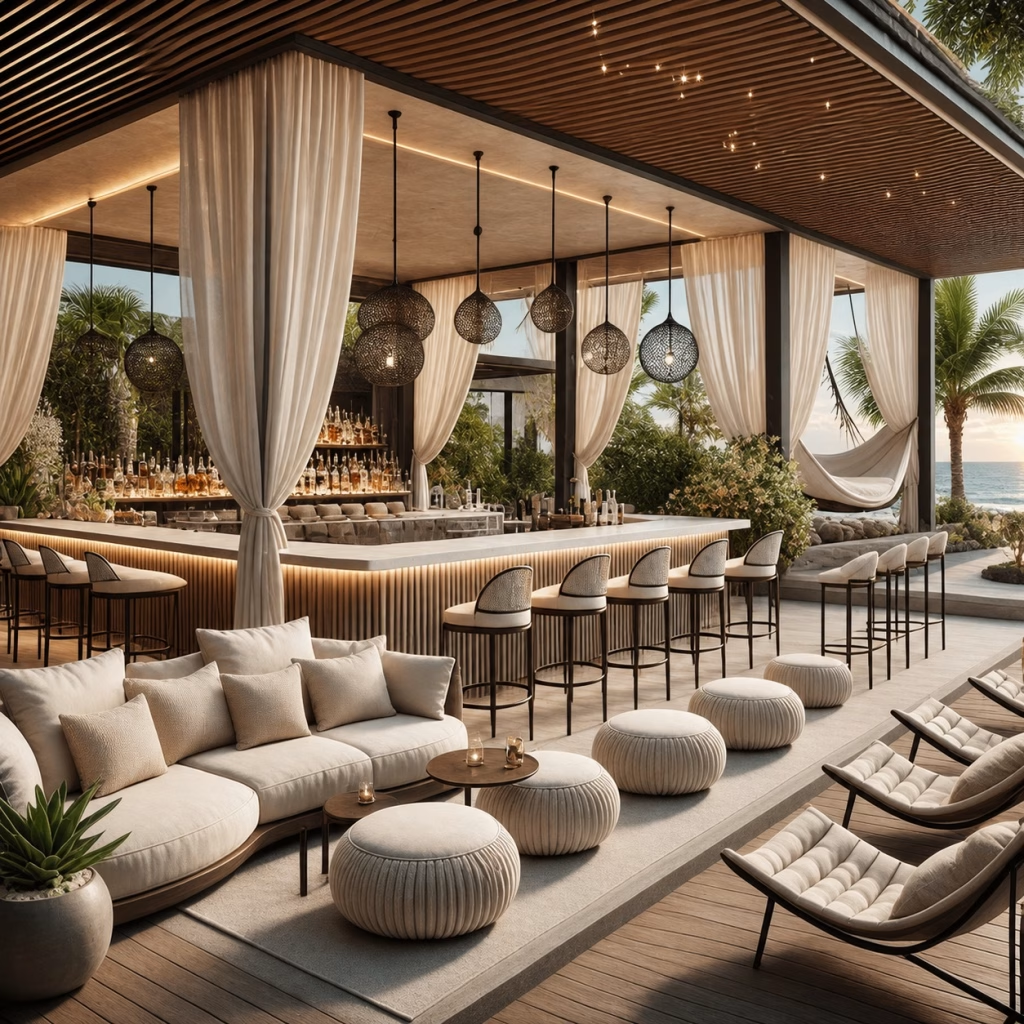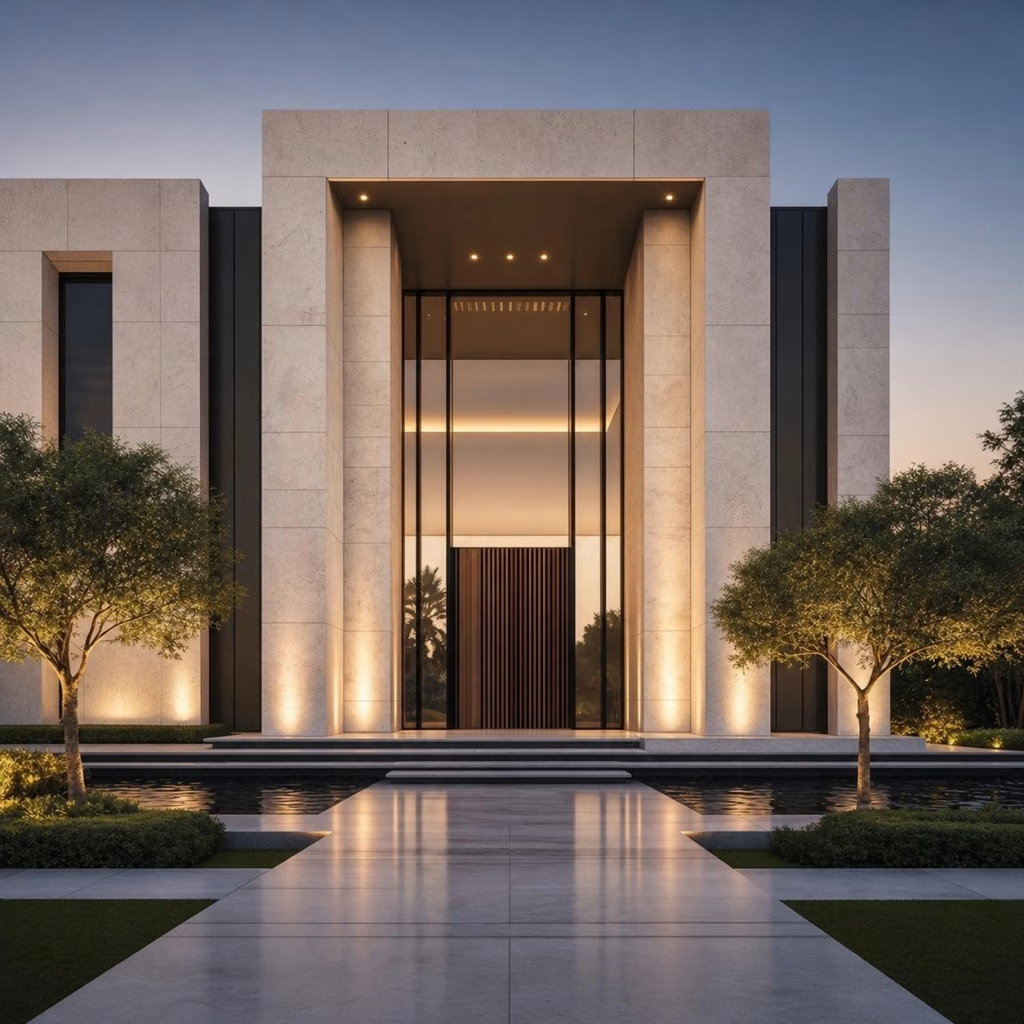


Dubai’s interior design market has specific failure modes that do not exist in most other residential markets. The combination of a permit-dependent construction environment, a diverse and often inexperienced contractor market, an extreme climate that punishes specification decisions made without local knowledge and a client base that is frequently commissioning a major interior design and fit-out for the first time creates a specific set of costly mistakes that Kat Black Design Studio sees repeatedly across the enquiries it receives from clients who have had a poor experience elsewhere. This guide documents the ten most common and most expensive mistakes, with specific guidance on how to avoid each one.
Mistake 1: Hiring Without Checking Licences
Dubai has a large number of interior design and fit-out businesses that operate without the licences required to undertake the works they advertise. The consequences for clients are significant: an unlicensed contractor cannot obtain DM permits for structural works, cannot manage DEWA sign-off for MEP installations and cannot be held accountable through the normal UAE commercial dispute channels for work that is unsatisfactory or incomplete. A contract with an unlicensed entity is unenforceable through the standard UAE courts in many commercial dispute scenarios.
Before signing any contract, verify three licences: the studio’s DED trade licence (available from the DED Smart App or online), which should list interior design, decoration or fit-out as a licensed activity; the UAE trade licence or CIDA (Construction Industry Development Authority) classification for any contractor undertaking structural works; and the DEWA contractor classification for any company undertaking electrical or mechanical installations. Request copies of all licences before signing and check their expiry dates. Kat Black Design Studio provides all licensing documentation on request as standard practice.
Mistake 2: Ignoring UAE Climate
Specifying solid timber flooring in a Dubai villa, installing natural stone without an appropriate penetrating sealer in a coastal property, using dark-toned exterior fabrics on covered terrace furniture and specifying single-glazed windows in a sun-facing elevation are all specification decisions made by designers or contractors without specific UAE climate knowledge. The consequences are visible within 12 to 18 months of occupation: solid timber flooring that has expanded and contracted through Dubai’s humidity cycles until it has gapped, cupped or lifted; unsealed stone on a Palm Jumeirah terrace that has absorbed salt and begun to spall; terrace cushions that have faded to a chalky shadow of their original colour after one Dubai summer.
UAE-specific specification knowledge required for a durable Dubai interior: engineered hardwood in preference to solid timber for all flooring (engineered construction resists humidity cycling); marine-grade powder-coated hardware for all external-facing door and window furniture in coastal locations; UV-resistant, commercial-grade outdoor fabrics from Sunbrella or Agora for all covered terrace upholstery; and a penetrating stone sealer appropriate for the specific stone type and its application location applied before any natural stone surface is exposed to use.
Mistake 3: No 3D Visualisation
Commissioning an interior design and fit-out in Dubai without photorealistic 3D visualisation of all principal spaces before construction begins is one of the most expensive mistakes a property owner can make, because it means that the first time you see what the finished interior will actually look like is when it has been built and cannot easily be changed. A kitchen that looked acceptable in a 2D floor plan and a specification sheet becomes obviously wrong in the first 3D render: the island is too large for the room’s proportions, the floor tile creates a visual conflict with the cabinet colour, the lighting positions make the ceiling feel low. Identifying these issues in a 3D render costs nothing to correct. Identifying them after the kitchen has been installed costs the full demolition and reinstallation price.
Kat Black Design Studio provides photorealistic 3D renders of all principal spaces as a standard deliverable for every commission, before any construction begins. This is not an optional upgrade: it is a core professional commitment to ensuring that every client can see, approve and be genuinely excited by their interior before the first wall is opened.
Mistake 4: Poor Lighting Plan
A poor lighting plan is invisible in the brief, invisible in the specification and invisible in the materials quote, but it becomes the most persistent and most frustrating quality failure in a completed interior because it cannot be corrected without opening up finished ceilings and replastering. The most common Dubai lighting planning mistakes are: specifying only downlights throughout (which produce a flat, institutionally bright illumination that makes even expensive materials look poor), not planning dimmable circuits (which locks the interior into one lighting level regardless of the time of day or the activity), and not providing adequate light to joinery and artwork (which leaves the interior’s most expensive elements in comparative shadow whilst the floor is brightly lit).
A correct lighting plan for a Dubai villa principal room includes: a dimmable ambient source (recessed plaster-in downlights or a coffered LED cove); task lighting for functional areas (kitchen under-cabinet strip, desk lamp provision); accent lighting for joinery, artwork and architectural features; and a scene-programmable control system (minimum a simple dimmer circuit; ideally a Lutron keypad) that allows the room to transition between day, entertaining and evening modes. This level of lighting planning adds minimal cost to the materials budget whilst transforming the quality of the lived experience of the interior across every hour of its occupation.
Mistake 5: Underestimating Budget
The single most common source of client dissatisfaction in Dubai interior design commissions is the discovery, mid-project, that the budget stated at the brief stage is insufficient for the specification level that the client actually wants. This happens because clients state a lower-than-actual budget in the expectation of receiving a lower initial proposal, or because the brief evolves during the design phase to include elements not costed in the original proposal, or because the contractor has provided an incomplete scope in the original quote (omitting MEP upgrades, permit costs, furniture or landscaping) to present a lower total figure.
The correct approach is to state your real budget and your real specification ambitions honestly at the outset, to require that every quote is all-in (covering design, materials, construction, permit applications, project management and furnishings), and to require that materials are specified by brand and series in the proposal rather than by generic descriptions that allow unlimited substitution. See the detailed guidance in and interior-design-cost-dubai/ for the specific cost ranges by property type and specification level.
Mistake 6: Ignoring DM Permits
Commencing structural renovation works in a Dubai villa without the required Dubai Municipality structural permit is illegal and carries significant consequences: DM inspectors who identify unpermitted structural works on site can issue stop-work orders, require the demolition and reinstatement of the completed works and impose financial penalties on both the contractor and the property owner. In Emaar-managed communities, the absence of an Emaar community NOC for structural works can result in the community authority requiring restoration of the property to its original configuration at the owner’s cost.
The permit requirement applies to all structural modifications: removal or modification of structural walls, creation of new door or window openings, modification of the internal staircase, addition of a structural mezzanine and all new pool construction. It does not apply to non-structural works including kitchen replacement, bathroom renovation, flooring replacement and joinery installation. Kat Black Design Studio assesses the permit requirements for every commission at the initial site survey and initiates all required permit applications at the earliest point in the design phase, ensuring that structural works are always covered by the required approvals before any tools are lifted.
Mistake 7: Wrong Flooring for UAE Climate
Flooring is the highest-impact and highest-cost finish in any Dubai villa or apartment, and the wrong flooring choice in the UAE climate is a specification error that is both expensive to correct and visually persistent for the years before it is corrected. The three most common UAE flooring mistakes are: specifying solid timber in a Dubai climate (solid timber responds to humidity cycling by expanding in summer and contracting in winter, producing gaps, cupping and surface checks that are progressive and irreversible in an air-conditioned environment); specifying polished natural stone on outdoor terraces or in bathrooms without an anti-slip treatment (Dubai’s rain events are infrequent but intense, and polished stone in wet conditions creates a dangerous slip hazard); and specifying carpet throughout a villa with young children or pets in Dubai (carpet accumulates dust, allergens and odour in air-conditioned environments far more rapidly than in naturally ventilated interiors, requiring deep cleaning cycles that most Dubai households do not maintain).
The correct flooring choices for a Dubai villa are: engineered hardwood (not solid timber) for all principal living and bedroom areas, in a brushed and oiled finish that accepts dimensional movement without surface checking; large-format porcelain with a minimum R10 anti-slip rating for all wet areas, terraces and pool surrounds; and hard flooring (stone, porcelain or engineered hardwood) with area rugs in bedrooms rather than wall-to-wall carpet.