
Meydan and Dubai Hills Estate are two of Dubai’s most design-literate luxury residential communities, connected not only by their proximity along the Al Khail Road corridor but by the specific character that golf and equestrian culture gives to their residential lifestyle. Both communities attract a client profile that is experienced, well-travelled and genuinely design-aware: the Abu Dhabi and GCC professional who chooses Meydan for its equestrian heritage and its racecourse’s extraordinary presence; the international buyer who selects a Mayfair golf villa in Dubai Hills for its direct course frontage and its community’s considered masterplan. The interior design trends that define both communities in 2026 reflect the sophistication of this client base and the specific lifestyle that golf and equestrian culture brings to the residential brief.
The Golf Community Lifestyle
The unifying character of both Meydan and Dubai Hills as residential communities is the presence of a world-class sporting venue as the community’s defining amenity and visual backdrop. In Dubai Hills, the Dubai Hills Golf Club’s 18-hole championship course provides a continuous green landscape of mature turf, sculptural sand bunkers and water features that every golf-facing villa looks onto as its primary outdoor view. In Meydan, the Meydan Racecourse provides an even more dramatic presence: the world’s most technologically advanced horse racing venue, with its extraordinary sweeping grandstand, visible from much of the community and defining the entire residential district’s identity.
The lifestyle that these venues create is one of outdoor engagement, physical activity and a connection to the natural and sporting world that is relatively rare in Dubai’s typically air-conditioned, indoor-focused residential culture. Both communities have residents who use the golf courses, the training tracks, the riding facilities and the walking paths as part of their daily routine. Interior design for both communities is most successful when it extends this outdoor connection into the home rather than creating a sealed, climate-controlled indoor environment that turns its back on the sporting landscape outside.
Design Trends in Dubai Hills & Meydan
The Natural Palette Convergence
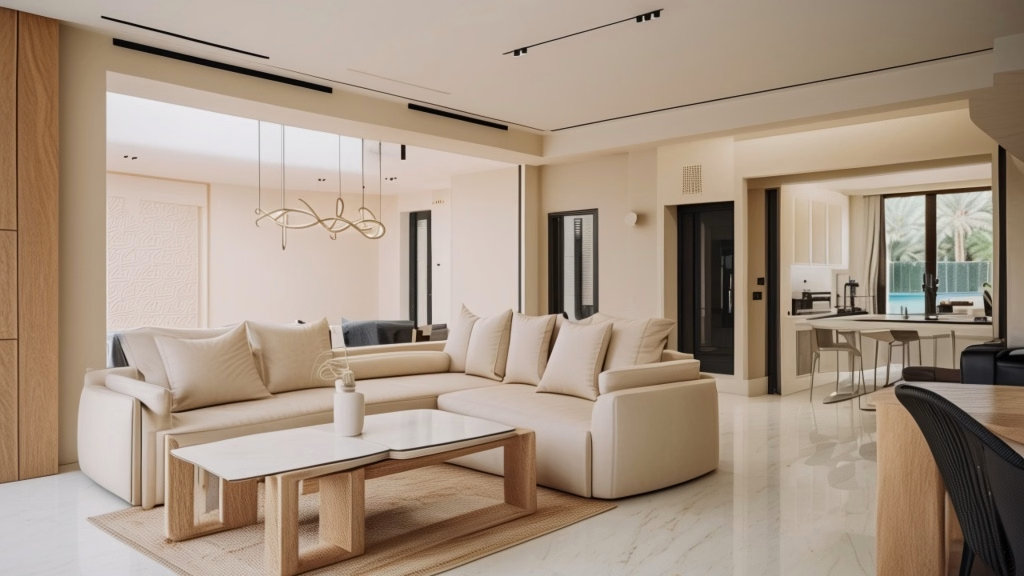
The most significant design trend across both communities in 2026 is a convergence on a natural, earth-tone material palette that harmonises with the specific outdoor colour field of each venue. In Dubai Hills, the dominant palette is warm green and gold from the golf course’s turf and sandy rough, with the occasional blue of a water feature: interior palettes of warm stone, linen and bleached timber work with this colour field rather than against it. In Meydan, the palette reference extends to the warm brown and chestnut tones of the equestrian world: leather, tanned hides, the deep gold of polished timber and the cream of sandy track all provide material references that ground the interior in the community’s defining character.
The convergence is most apparent in the specification of flooring and wall finishes: both communities show a strong trend towards engineered hardwood floors in brushed and oiled finishes (Mafi smoked oak in Dubai Hills, Mafi white oak in Meydan), hand-applied microcement or limewash walls in warm ivory or pale ochre tones, and natural stone in the Jerusalem Gold, Jura Beige or Travertino Navona tone families that complement both communities’ outdoor colour fields.
Seamless Indoor-Outdoor Integration
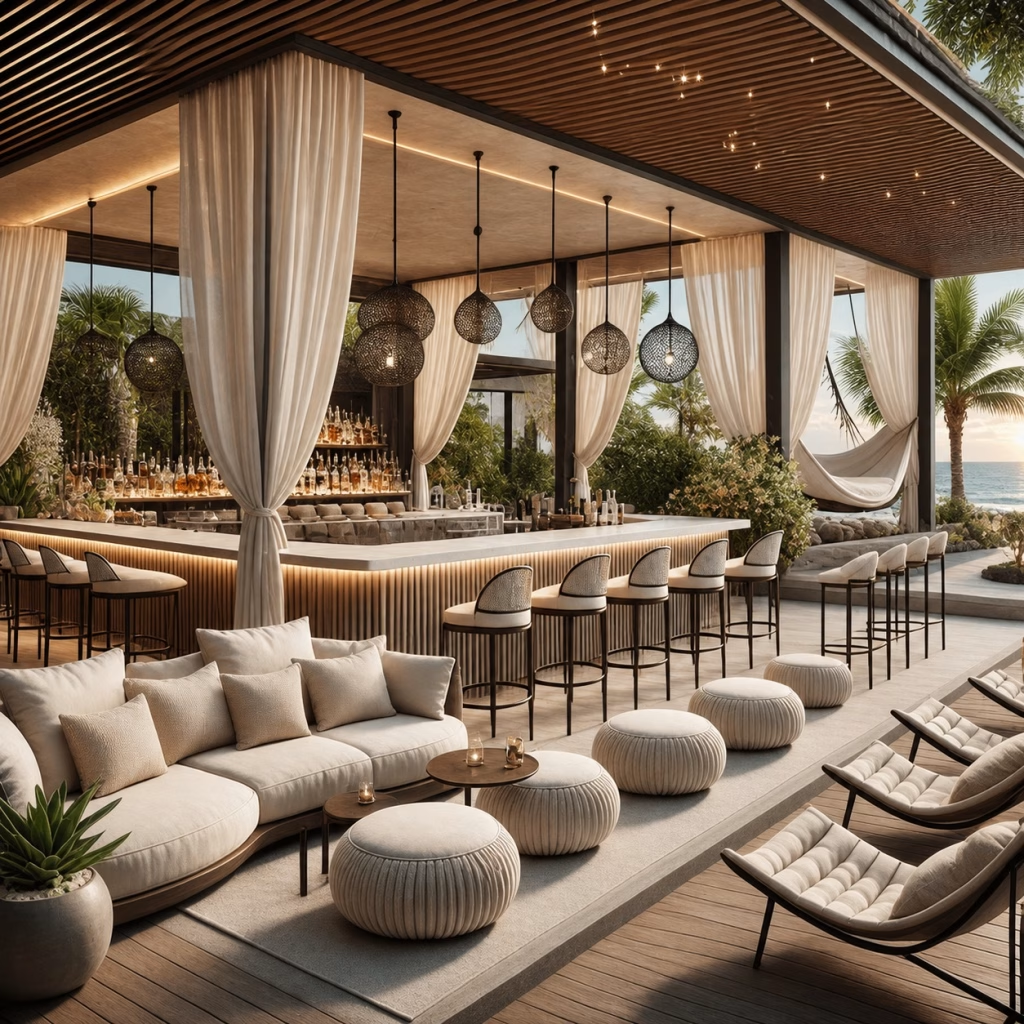
Both communities have a strong October to April outdoor season, and the trend toward indoor-outdoor integration, documented in the 2026trends guidevilla-interior-design-trends-dubai-2026/, is particularly intense here. In Dubai Hills golf villas, the covered rear terrace has become an interior-quality outdoor room: Renson louvered pergola systems, Dekton outdoor kitchen worktops, Dedon lounge furniture and a lighting scheme as considered as the indoor programme. In Meydan, the additional land area of the Avenue villas supports more ambitious garden and pool programmes, with lap pools oriented to maximise the racecourse view and outdoor dining pavilions positioned to face the course’s grandstand.
Technology Integration as a Quality Marker
Smart home integration has become a quality expectation rather than a luxury option for premium properties in both communities. The specific smart home platforms preferred in these communities reflect the profile of their owners: Crestron for the most demanding ultra-luxury commissions in Mayfair and Meydan Avenue, Lutron Homeworks QSX for properties where lighting and shading integration is the primary requirement, and KNX for the mid-luxury tier where system longevity and manufacturer independence are valued over the polished user interfaces of the proprietary platforms. The absence of a smart home system is now a competitive disadvantage in the premium rental market of both communities.
Golf Course View Design Principles
The specific design principles for golf course-facing rooms in Dubai Hills Mayfair and Golf Place, documented in detail, apply with equal force to the racecourse-facing properties of Meydan. In both contexts, the exterior view is the property’s primary value driver, and the interior design must be conceived to frame and celebrate that view rather than compete with it.
For golf course-facing rooms, the four principles are: the view is the hero (every design decision in the principal rooms assessed against whether it enhances or diminishes the quality of the view experience); palette as complement (neutral warm tones that harmonise with the course’s green and gold colour field rather than contrasting with it); motorised solar-control shading (Lutron or KNX motorised roller blinds in translucent fabric for daytime solar management without view loss); and visual transparency at every layer (glass occasional tables, slim-profile furniture, joinery kept below transom height of course-facing windows).
For racecourse-facing Meydan properties, the same principles apply but the palette reference is different: the racecourse’s colour field includes the deep green of the manicured track, the rich brown of the track surface and the dramatic silver and white of the grandstand’s sweeping structure, allowing a broader palette that can accommodate more neutral-warm and even warm-grey tones alongside the earth-referenced materials of the equestrian direction.
Community Aesthetics
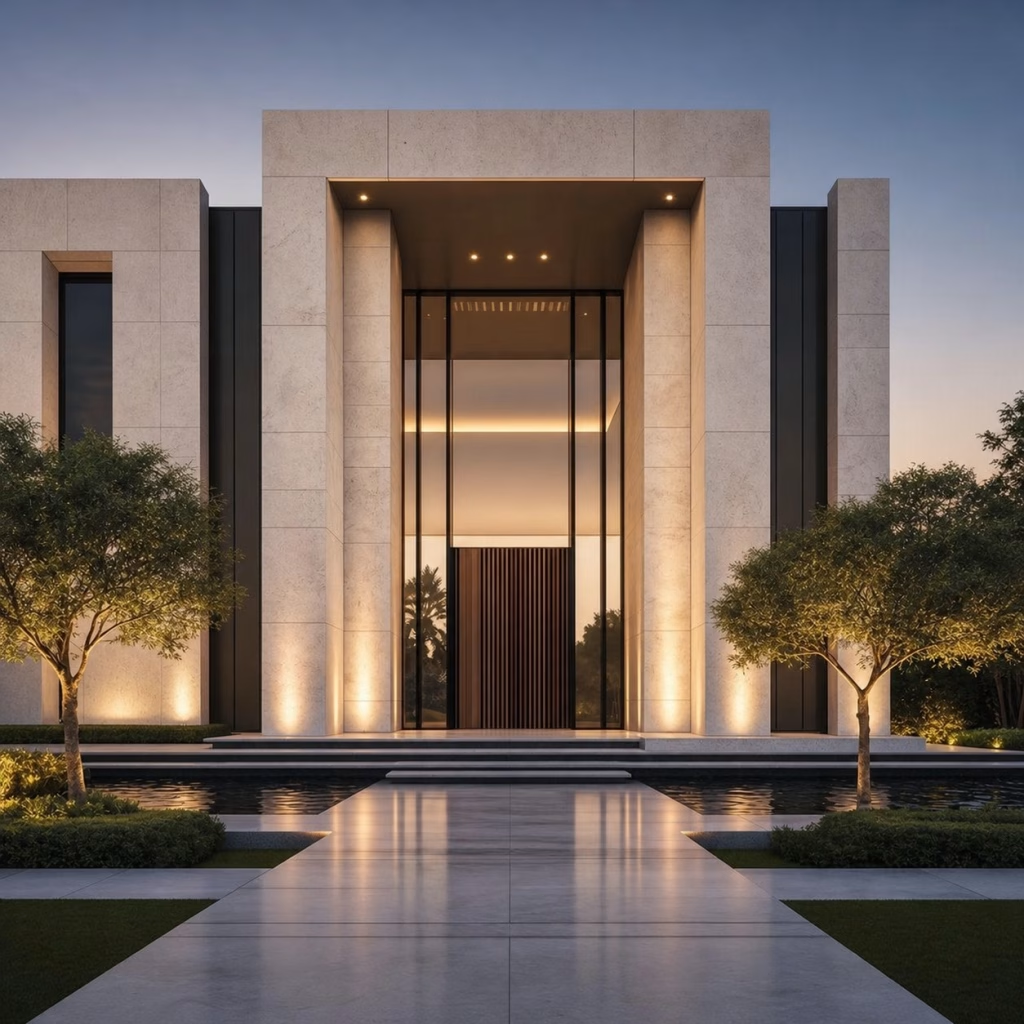
The two communities have distinct aesthetic characters that shape their interior design trends in different ways. Dubai Hills Estate has the aesthetic character of a thoughtfully planned master community: every villa, every street planting and every community facility reflects a coherent visual language of contemporary Arabic-influenced architecture in warm rendered finishes and generous landscaping. The interior design trend that fits this character most naturally is the Contemporary Luxury direction: architecturally precise, materially honest, with a palette that extends and deepens the warm tone reference of the community’s external architectural language.
Meydan has a more dramatic and more culturally specific aesthetic: it is defined by the extraordinary scale and ambition of the racecourse grandstand, by the community’s deep connection to the UAE’s equestrian heritage and by the social culture of the thoroughbred racing world, which is one of the most design-literate and internationally sophisticated sporting cultures in existence. The interior design aesthetic that serves Meydan best is the equestrian lifestyle direction: warm natural materials, earth tones, crafted surfaces, leather and woven textiles, bronze and brushed gold metalwork, and artworks that reference the UAE’s own racing heritage.
Material Trends
The specific material trends defining both communities in 2026 are closely related, reflecting their shared natural palette orientation.
- Engineered hardwood flooring: Mafi brushed white oak or smoked oak in 250mm-plus plank widths across all principal living and bedroom areas. The move away from large-format porcelain tile in principal living rooms and towards engineered hardwood is the single most significant material shift in both communities in the past two years.
- Natural stone in earth tones: Jerusalem Gold limestone, Jura Beige limestone and Travertino Navona in large-format honed or brushed finishes for reception room floors and kitchen island tops. Bookmatched marble in Arabescato or Calacatta specifications for master bathroom feature walls and vanity surfaces.
- Hand-applied wall finishes: microcement in a warm ivory or pale ochre tone replacing flat emulsion paint in principal living rooms and entrance halls. The texture of a hand-applied finish is one of the most commercially significant differences between a quality-specification and a premium-specification interior in both communities.
- Leather and woven textiles: specifically in Meydan, the equestrian lifestyle direction has driven a strong trend towards leather upholstery in deep cognac, chestnut and warm tobacco tones, woven wool in herringbone patterns and hand-stitched leather details on joinery handles and cushion trims.
- Bronze and brushed gold metalwork: the warm metallic tone that has replaced polished chrome as the default hardware finish across both communities, appearing in tap fittings, door handles, light switches, ceiling fixtures and joinery hardware.
Smart Home in Golf Communities
The smart home requirements of golf and equestrian community villa owners in Dubai Hills and Meydan have specific characteristics that reflect their lifestyle patterns. Extended travel during the summer months (typically May to September, when both communities’ residents relocate to Europe, North America or the northern hemisphere) creates a specific requirement for remote monitoring and management: the ability to set the HVAC to a property-preservation mode whilst travelling, to monitor the pool chemistry and operation remotely, to receive security alerts from the villa’s camera and access control system and to manage the irrigation system of the garden in absences of 3 to 4 months.
Crestron and KNX smart home systems both provide the remote access and the robust long-term operation reliability appropriate for these extended-absence conditions. Lutron Homeworks QSX provides reliable remote lighting and shading management at a lower entry cost for properties where the full home automation capability is not required. Kat Black Design Studio specifies the appropriate platform for each commission based on the client’s specific lifestyle pattern, their travel profile and the scope of automation they genuinely need rather than the maximum capability available.