

Fine-Dining Interior Design in Dubai
Client Type
Signature fine-dining restaurant, chef-patron led
Location
Gate Village, DIFC
Cover count
96 main dining, 14 counter, 12 private dining, 8 bar
Floor area
4,400 sqft
Programme
18 weeks brief to first cover
Regulatory
DEWA sign-off, DIFC Authority fit-out approval, Dubai Municipality Food Safety approval, Civil Defence approval
Project Overview
A Category B fit-out for a 96-cover signature fine-dining restaurant taking a 4,400-square-foot ground-floor unit in Gate Village in DIFC, opened by a Michelin-experienced chef-patron in partnership with a regional hospitality group. Scope: complete Cat B interior including a 96-cover dining room, a 14-seat counter facing an open theatre kitchen, a private dining room for 12, a bar with 8 stools, a fully equipped commercial kitchen with cold and hot lines, dishwash, dry and chilled stores, staff facilities, and all MEP works to DEWA sign-off standard, including the 6-tonne kitchen extract canopy and the Class 1 grease-line ductwork running to the building riser. Lease commencement, the chef-patron’s first-service date and a confirmed press launch were all fixed and non-negotiable. Timeline: 18 weeks from brief to first paying cover.
01. The Brief
Project Details
The client was a chef-patron with twelve years of senior kitchen experience across Michelin-starred restaurants in London, Paris and Copenhagen, opening their first restaurant under their own name in partnership with a Dubai-based hospitality group. The new Gate Village address was the chef-patron’s first ownership commission and the brief was uncompromising: the restaurant was to operate at the standard of an established European signature restaurant from the first cover of the first service, not build towards it over a soft-opening period. The dining room was to feel composed, considered and intimate at full 96-cover capacity, without the acoustic compression that defeats most large Dubai restaurants by their second year. The 14-seat counter was to give every guest a clear sightline to the chef-patron’s pass and a working theatre of plating without the heat, noise and cooking aerosols that ordinarily make open kitchens uncomfortable for the diners closest to them. The kitchen behind the pass was to be specified as a working professional environment to the standard of the chef-patron’s previous kitchens, not a hospitality-group standard. And the entire restaurant was to be DEWA-signed, Food Safety-approved and trading by a fixed opening night anchored to a confirmed regional press and critic launch.
03. The Concept
Design Concept
The design concept was developed across three workshop sessions with the chef-patron and the operating partner in the first three weeks of the commission. Three brand values emerged as the primary design drivers: composure (the restaurant is the chef-patron’s ownership debut and the design language must communicate confident maturity rather than opening-night ambition); seasonality (the menu is a working expression of the chef-patron’s Northern European training applied to Gulf produce, and the interior was to express the same quiet, ingredient-led sensibility through its materials and its light); and craft (the restaurant’s entire commercial proposition is the personal, hand-finished work of the chef-patron, and every visible surface in the dining room was to communicate the same standard of hand-finishing as the food on the plate).
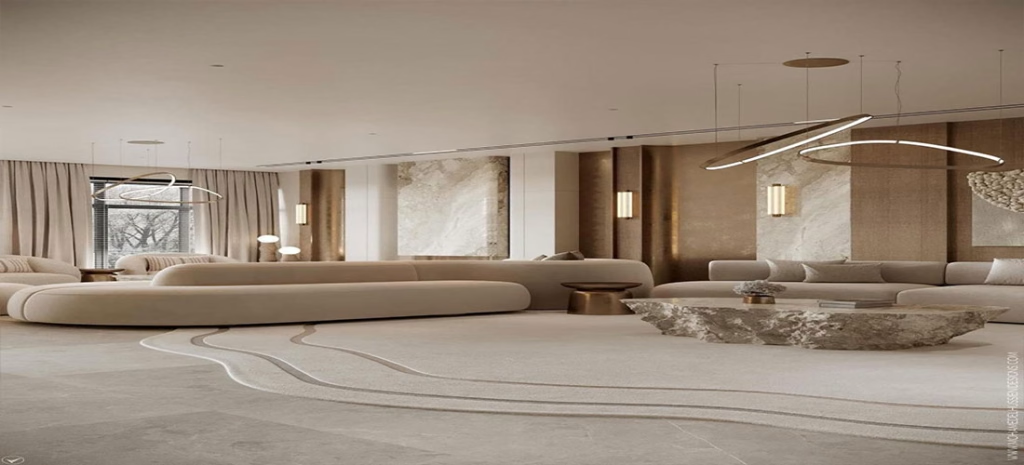
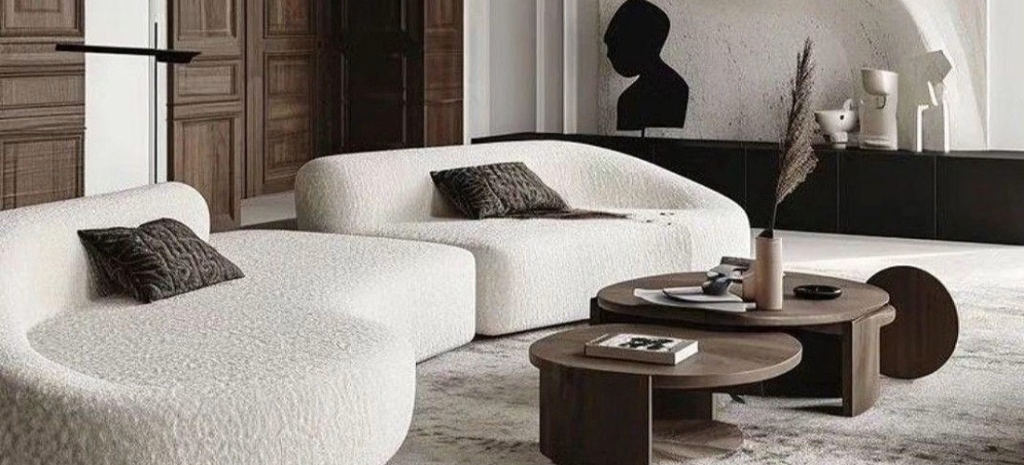
The design response was a palette and material programme of warm restraint: Beige Travertin limestone in a brushed finish to the dining room and bar floors; hand-troweled lime plaster to the dining room walls in a soft oat tone, leaving the trowel marks visible as evidence of the hand-work; smoked European oak joinery to the bar, banquettes and PDR panelling; a custom-made bouclé in undyed wool to the banquette upholstery; aged brass at every hardware, light fitting and table fitting position; and a custom decorative plaster ceiling in a lightly textured finish, designed in coordination with the acoustic engineer to incorporate a 25mm acoustic infill behind the visible plaster surface. Lighting was specified as a low-level layered scheme of pendant fittings on dimmed warm circuits over each table, with no overhead general illumination at any point in the dining experience after sundown. The design communicates the restaurant’s seriousness through material warmth and hand-finishing, not through statement gestures or branded graphic application.
The Fit-Out Process
The 18-week programme was the defining technical challenge of the commission, given that a comparable DIFC fine-dining fit-out at this specification, with this scope of mechanical extract and this volume of bespoke joinery and millwork, would more typically run to 22 to 24 weeks. This was achieved through three programme management decisions: parallel submission of the DIFC Authority fit-out approval, the Dubai Municipality Food Safety pre-submission, the Civil Defence approval and the MEP design development in week one, before the final dining room layout had been signed off, using preliminary drawings updated as the layout was resolved; an early engagement with the building landlord’s technical team in week two to coordinate the 6-tonne kitchen extract canopy, the Class 1 grease-line ductwork and the makeup-air pathway through the building riser, removing what is ordinarily a 4-week landlord-coordination delay from the critical path; and off-site fabrication of all banquettes, the bar, the host station, the wine display and the PDR panelling commencing in week 5, allowing the entire millwork package to be installed in three compressed weeks at the end of the programme rather than fabricated on the critical path.
Read More
Phase | Duration | Key Activities |
Brief, design and approvals submission | Weeks 1 to 4 | Client brief, concept design, DIFC Authority approval, Food Safety pre-submission, Civil Defence submission, MEP and kitchen design |
Kitchen extract and grease-line | Weeks 4 to 8 | Canopy fabrication, riser ductwork installation, fire suppression system rough-in, building landlord coordination |
First fix (partitions, MEP) | Weeks 5 to 10 | Dining room and PDR partitions, ceiling grid, electrical first fix, gas first fix to kitchen line, water and drainage |
Joinery and millwork (off-site, parallel) | Weeks 5 to 14 | Banquette frames, bar, host station, wine display, counter front and PDR panelling: all fabricated while first fix in progress |
Kitchen line installation | Weeks 10 to 13 | Hot line, cold line, pass, dishwash, cold stores, chef’s table service infrastructure, gas commissioning |
Wet trades and finishes | Weeks 11 to 15 | Tiling to kitchen and back-of-house, plastering, decorative plaster to dining room, stone floor installation, upholstery installation |
Joinery installation and FF&E | Weeks 15 to 17 | Bar, banquettes, host station, wine display and PDR panelling installed; loose furniture, table tops, lighting and tableware delivery |
Approvals, commissioning and soft launch | Weeks 16 to 18 | DEWA inspection, Civil Defence sign-off, Food Safety inspection, AV commissioning, friends-and-family service, opening night |
05. Result
Timeline Management
The 18-week delivery against a confirmed press-launch opening night required a programme management approach significantly more intense than a standard Dubai commercial fit-out, particularly given the multi-authority approvals path and the technical complexity of a working professional kitchen behind an open pass. Kat Black Design Studio’s project manager attended site six days a week throughout the active construction phase and coordinated directly with the chef-patron, the head chef and the kitchen consultant on a fixed twice-weekly schedule. A daily written progress report was issued to the operating partner each evening, covering the day’s completions against the programme baseline, any emerging risks and the actions taken to manage them. Three programme-level risks were identified and managed during the project: a 14-day delay on the imported kitchen line shipment from Italy (managed by advancing the gas, water and drainage first fix to a complete state and pre-installing the canopy and fire suppression so that the kitchen line could be installed and commissioned in 11 days from container arrival rather than the standard 18); a Food Safety inspector availability delay of 5 days (managed by completing the entire back-of-house finishes programme 8 days ahead of programme so that the inspection window could absorb the slip without affecting opening); and a delivery delay on the bouclé upholstery from the European mill (managed by sequencing the banquette installation to leave upholstery as the last operation in the dining room, with the upholstery applied in situ during the 36 hours preceding the friends-and-family service).
The DEWA sign-off certificate was issued on day 122 of the 126-day programme. The Food Safety approval was issued on day 124. The friends-and-family service ran on day 125 and the first paying cover was served on day 126.
The Result
The completed Gate Village restaurant is, by the standard of the signature fine-dining rooms that define DIFC’s evening scene, among the most composed and most precisely resolved restaurant interiors in the city. The dining room, with its hand-troweled lime plaster walls, its Beige Travertin floor and its custom acoustic decorative plaster ceiling, holds 96 covers at full service with a measured ambient noise level that allows guests at adjacent tables to converse at a natural conversational volume, a result that the chef-patron and the operating partner have repeatedly cited as the single most valuable design outcome of the project. The 14-seat counter, with its smoked European oak front and its sightline framed by a 4-metre brushed brass valance concealing the kitchen extract, gives every counter guest a working theatre of plating without the discomfort that ordinarily accompanies open kitchen seating. The kitchen behind the pass, specified to professional European standard and signed off by the chef-patron without modification, has run a full 96-cover service, a 12-cover PDR service and the counter concurrently every evening since opening. The restaurant received a leading regional critic’s top rating within its first three months of trading.
Our Insights

Are you ready?
“We had a press launch date that we could not move and a kitchen specification that did not allow any compromise. Kat Black delivered both. The dining room sounds the way I wanted a 96-cover restaurant to sound, which is the single thing every chef will tell you Dubai gets wrong. The kitchen is built to the standard I worked to in Europe and we have not changed a single thing in it since opening service. They understood that for a chef-patron the building is not a venue, it is the work.”
Chef-Patron
Signature Fine-Dining Restaurant, DIFC
Request a Free Consultation
Kat Black Design Studio has completed projects across Dubai Hills Estate, Palm Jumeirah, Emirates Hills, DIFC and beyond. If you are ready to discuss your interior design, renovation, fit-out or landscaping project anywhere in Dubai or the UAE, request a complimentary consultation today, with no obligation.
Or contact us directly via WhatsApp. All enquiries receive a response within two business hours.